
Ashley Whitlock
Hampshire & IOW Butterflies and Moths
The Large Tortoiseshell Butterfly in Hampshire and the Isle of Wight

Large Tortoiseshell taken in the New Forest
The Large Tortoiseshell has been almost common on the Island in 2026, with a good showing in Kent and Sussex.
Photo: Nikki Kownacki

Large Tortoiseshell distribution in Hampshire and the Isle of Wight in the last decade or so

Large Tortoiseshell in Europe in the last 50 odd years
The Large Tortoiseshell in Hampshire a potted history
This enigmatic butterfly was once a common insect in the 19th century in Hampshire, being found in the New Forest, along the coast to Portsmouth and up into the Ashford Hangers.
Until the early part of the 20th century it also occurred throughout much of the UK, then became intermittent into the 1920’s then it rallied in the 1940’s, before falling into obscurity. Entomologists believed that the demise was through attacks by parasites on the gregarious feeding larvae on its foodplant Elm.
Once quite common in the New Forest, it was found around keepers’ cottages in the Inclosures in the 19th century. It’s host trees Sallow especially (caprea) and Elm were much more common in the rides before the advent of the first world war.
Frohawk, a famous butterfly Entomologist is quoted as saying that it was common in the New Forest in 1893, when collecting was commonplace, with the taking of larvae around its favourite trees making it very easy to take the caterpillars or larvae at various stages. The Beaulieu Road Hotel was regularly plundered, as the Elms there were always covered in its larvae.
In the years of 1928-1931 it became uncommon in the forest; it disappeared along the coast towards Portsmouth. It was more common between Salisbury and Southampton in the late 1940’s. Then, in the Chilcomb area of the Test Valley, and over towards the Ashford Hangers, in and around the Petersfield in the early 1970’s and 1980’s.
In Hartley Wood and the Oakhanger woods in 1977 it was seen near some wild Cherry trees and at Wick Wood, and Cobden Copse Blacknest in 1984.
Dutch elm disease (DED) first appeared in the north-west of Europe about 1910. Between 1914 and 1919 several Dutch scientists carried out influential research on the cause of the disease. Then in the late 1920s Dr Tom Peace of the British Forestry Commission began to monitor its rapid spread to the United Kingdom.
This coincided with the rapid disappearance of the Large Tortoiseshell butterfly along with the White-Letter Hairstreak to a lesser degree, which can survive on Wych Elm growing along hedgerows. But this begs the question why the Large Tortoiseshell became extinct, even though it is known to breed on Sallow, Cherry and other fruit trees.
It has been seen on and off in several locations, along the coast in 1990’s and 2000’s especially, in and around Havant, north of Portsmouth. This area is covered in Elm Trees along the roadside verges and in the grounds of Queen Alexandra Hospital at Cosham. I suspect it could utilise these trees for breeding as there are colonies of White Letter Hairstreak there. Although so far as I understand it there hasn’t been any sighting yet of egg laying females or larvae feeding on Elm in this area.
Global warming may well be the kick start of its return to the UK, as there were more sightings in the 2010’s and 2020’s. There has been an influx from the Continent, especially from Holland and France.
On the Isle of Wight, in 2025/26 the Large Tortoiseshell has done well in the early spring months, and was also reported from Dorset, Hampshire, East and West Sussex, and a large influx in Kent.
The summers have been warm and the winters very mild which should favour this insect to become the UK’s 60th species once again.
Large Tortoiseshell declared no longer extinct in Britain
Conservationists have confirmed that Large Tortoiseshell is no longer extinct in Britain, with the species now breeding here once again.
Although the species is officially classed as 'regionally extinct' in Great Britain on Butterfly Conservation's GB Butterfly Red List, last updated in 2022, experts at the charity have said that this status will change when the next Red List assessment is made in a few years' time.
The news follows a recent cluster of early spring records across southern England, with butterflies emerging from hibernation in counties including Kent, Sussex, Hampshire, Dorset, Cornwall and the Isle of Wight. These sightings have led conservationists to recognise the species once again as a resident rather than a migrant or vagrant.
Large Tortoiseshell was widely believed to have disappeared from Britain during the mid-20th century, with the species considered extinct as a breeding butterfly for several decades. Its decline was often linked to the widespread loss of elm trees caused by Dutch elm disease, although the precise reasons for its disappearance have never been fully understood.
Britain's 60th resident butterfly species
Recent evidence, however, suggests the butterfly has begun to re-establish itself. Since 2020, caterpillars have been discovered feeding on trees in the wild – clear proof that the species is breeding again in Britain.
Professor Richard Fox, head of science at Butterfly Conservation, said in The Guardian the development was encouraging. He commented: "The signs are really positive, which is lovely. It is resident and therefore it is another species to add to Britain's total."
Unlike the familiar Small Tortoiseshell, whose caterpillars feed on nettles, Large Tortoiseshell is associated with trees. Its larvae feed on species including elm, willow, aspen and poplar, and the adults typically inhabit woodland and wooded landscapes.
Large Tortoiseshell becomes the country's 60th resident butterfly species.
Large Tortoiseshell back in Britain
Researchers believe climate change and growing populations on the European continent may be helping the butterfly recolonise southern Britain. Increasing numbers have migrated across the North Sea and the Channel in recent years, particularly from the Netherlands and France.
Although the species is not yet firmly established nationwide, conservationists say the recent breeding records and spring sightings offer hope that Large Tortoiseshell may once again become a regular part of Britain's butterfly fauna.
Professor Fox added: "When a new species colonises, there is a period of uncertainty: many species that colonise take off and become common, but some remain highly localised and can even then be lost; at the moment, for Large Tortoiseshell, we're in that wait-and-see phase."

Elm trees are the place to look for its eggs, and larvae

The larvae can also utilise the following trees: Sallow , Aspen, Cherry, Pear and Apple trees.

2026 and they have been on the BBC News!
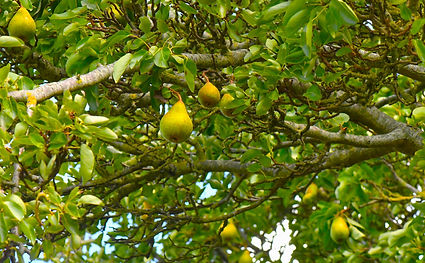

Pear and Apple trees are used mainly on the continent by the Large Tortoiseshell, especially in areas devastated by Dutch Elm disease, which in turn has turned a corner as there is evidence growing that Elm resistant strains could also be used by this species now that the White Letter Hairstreak has also utilised this strain.
The Large Tortoiseshell is very close to home!

Saturday February 27th 2021 another warm day in Cosham and would you believe it the Large Tortoiseshell was back for another sunbathing session. This time Graham had his camera ready with a lens which highlights the beauty of this rare butterfly. It was in his next door neighbours garden so it had not travelled far. As you can see from the photographs its in superb condition and I have highlighted the wing patterns for ID purposes.
This butterfly has obviously overwintered as an adult, where I hear you ask, well there may well be areas like Hilsea Lines and North Harbour, which are very sheltered and have lots of trees and shrubs in which to hibernate.They could even have Elms in which these butterflies could breed, as we know North Harbour has the White-Letter Hairstreak breeding on the Elm trees there. Could we have a small population of Large Tortoiseshell butterfly breeding in Portsmouth?
Photo copyright Graham Roberts
Unpresidented number of Large Tortoiseshells seen on the Isle of Wight in 2026



The caterpillers of the Large Tortoiseshell feeding on the leaves of Wych Elm (left)
The Dutch Elm disease is instantly recognisable by its marks made on the tree underneath the bark which dies after being attacked by the beetle larvae. (right)

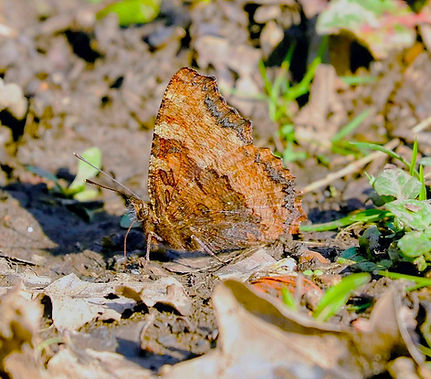
Typical pose of a male Large Tortoiseshell Photograph Nikki Kownacki
